North Indiana winters bring plenty of snow along with frequent freeze-thaw cycles, which makes ice dams a common problem for homeowners in the area. When snow builds up on a roof and isn’t dealt with, ice dams can form and eventually lead to roof leaks and expensive water damage. That’s why it’s important for homeowners to understand how ice dams form and what they can do to help protect their homes and property. Because ice dams develop gradually and aren’t always visible from the ground, many homeowners are unaware of the problem until damage has already occurred. Understanding what preventative measures can be taken is crucial for homeowners looking to protect their roofs.
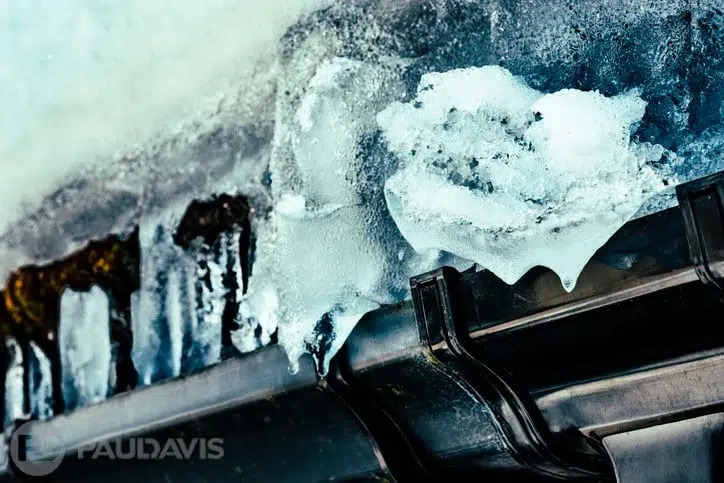
Ice dams form when a roof that is warmer than the eaves causes snow on the roof to melt, the water to flow down to the colder eaves, and then refreeze. As this cycle repeats, ice can back up or “dam” under shingles, allowing water to accumulate behind it. The water can leak through the roof and cause serious damage to walls, insulation, ceilings, and painted surfaces inside the home that may only get worse over time. However, there are some simple steps one can take to prevent ice dams.
Improve Attic Insulation & Seal Air Leaks
Proper insulation around hatches and chimneys help maintain consistent temperatures and prevent the warm air buildup that leads to ice dams. Making sure your insulation is evenly distributed will ensure the heat stays inside the home instead of escaping through the roof. Additionally, attic spaces should have at least 12 inches of insulation.
Clean Gutters & Check Roof Ventilation
Clear gutters and downspouts preferably before winter arrives so melting snow can drain properly away from the roof. Clogged gutters trap water which can freeze and affect ice damming.
Ventilation is less important than insulation, but still a factor in preventing ice dams. Proper ventilation will allow any heat that does enter the attic to exit the space and be replaced by cold outside air.
Remove Snow Regularly
Removing snow after a heavy storm with a roof rake can help prevent ice from building up and causing damage down the road. Making sure to remove the snow, especially near the eaves, is an effective prevention method for ice dams. Consider adding heated roof cables for added ice dam prevention.
Arrange for Home Check-Ins
If you will be away for an extended period of time in the winter months, ask a trusted neighbor to check for ice buildup, leaks, or heavy snow occasionally, especially during long trips or major storms.
Protect Your North Indiana Home This Winter With Paul Davis
By following these simple steps, you can reduce the risk of ice dams and keep your home protected throughout the winter. If ice or water damage occurs, reach out to Paul Davis Restoration of Northeast Indiana for help restoring your property quickly and safely. Our local team is IICRC certified and has the knowledge and experience to help property owners in this situation. We also have the specialized equipment to clean up, dry, and repair your property.
Ice Dams— Frequently Asked Questions
Paul Davis of Northeast Indiana will send out an estimator upon receiving your call and will provide a detailed cost breakdown for your individual situation following the inspection.
Yes, for effective ice dam prevention and safe removal, it’s best to hire a professional like Paul Davis. Salt filled socks or chipping ice away manually may damage roofing or cause additional issues, however, experts can melt and clear the ice properly without causing any damage.
We recommend keeping the temperature in your home stable, and approximately between 65-70°F during winter. Large temperature swings inside the home can contribute to uneven roof melting.